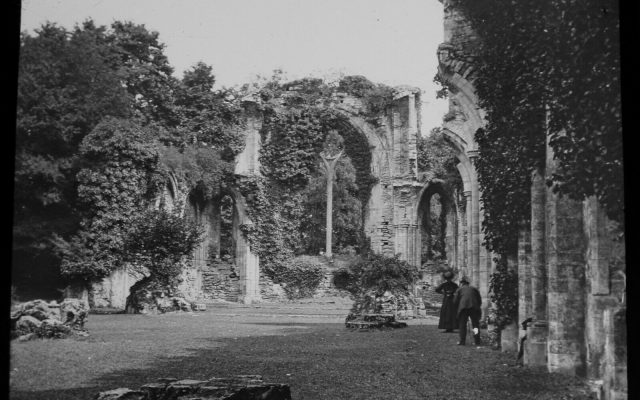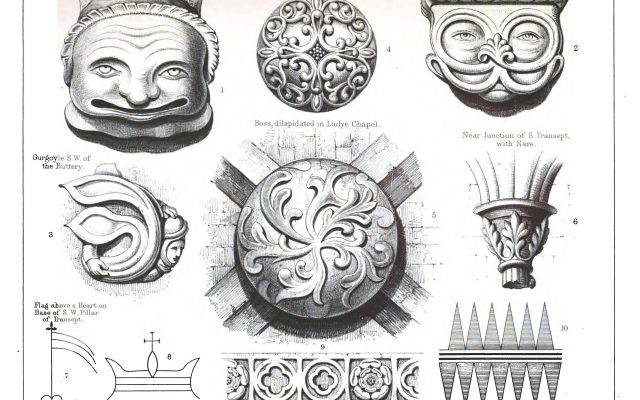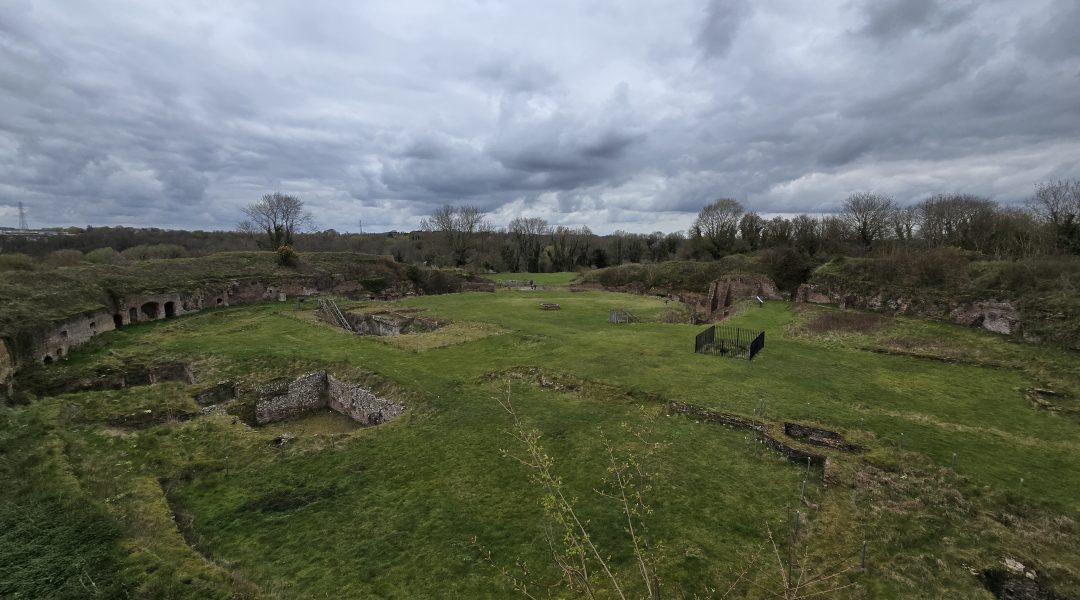
I visited Basing House in Hampshire for the first time this week, and it got me thinking about a connection that doesn’t get talked about enough — the link between Basing House and Netley Abbey through one man: William Paulet, 1st Marquess of Winchester.
The Paulet Connection
Most people know Basing House as the site of one of the most dramatic sieges of the English Civil War. Cromwell’s forces battered it into submission in 1645 and demolished much of the building afterwards. But before all that destruction, it was one of the grandest houses in England — and it was built by the same man who acquired Netley Abbey after the Dissolution.
When Henry VIII dissolved the monasteries, Paulet was one of the men who benefited. He was granted Netley Abbey in 1536 and set about converting it from a functioning Cistercian monastery into a Tudor mansion. At the same time, he was expanding and improving Basing House into the showpiece palace that would later be described as “the greatest of any subject’s house in England.”
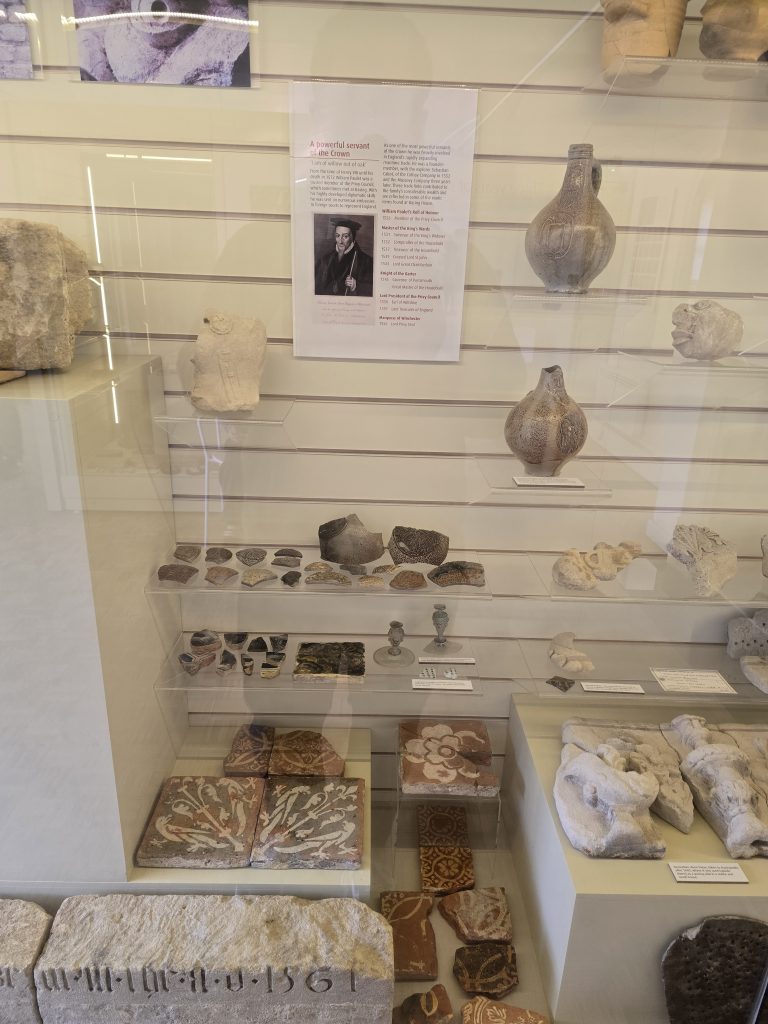
Did Netley’s Stones End Up at Basing?
Here’s where it gets interesting. After the Dissolution, it was extremely common practice for new owners to strip monastic buildings for materials. Lead from the roofs, timber from the structures, stonework, decorative elements, floor tiles — anything of value was reused rather than made from scratch. It was practical and it was economical. Why commission expensive new materials when you’ve just been handed an entire abbey full of them?
Paulet controlled both Netley Abbey and Basing House. He had the means, the motive, and the transport links to move material between the two sites. Netley sits right on Southampton Water, and heavy goods moved by boat as a matter of course in the Tudor period. It would have been straightforward to load stone, tiles, and timber onto a barge at Netley and ship it along the coast and up the rivers toward Basingstoke.
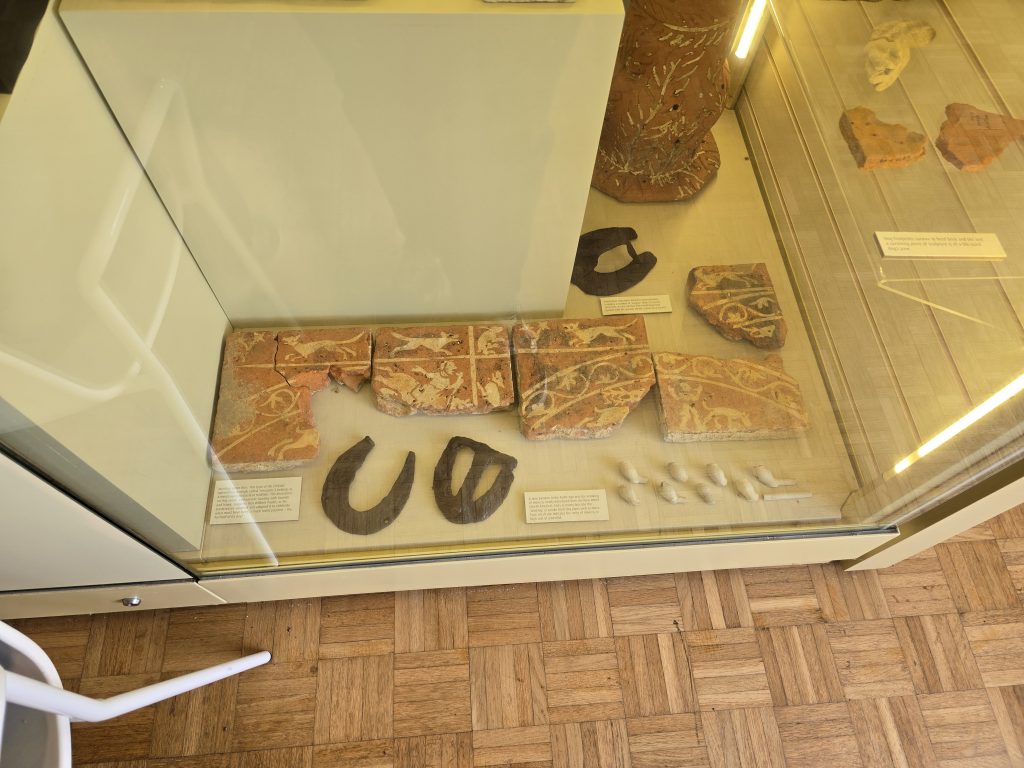
Walking around the Basing House museum, I noticed encaustic floor tiles with designs very similar to those found at Netley and other monastic sites across southern England. Now, I should be honest here — these tile designs were widely produced and used across many religious houses. The same workshops and pattern books supplied tiles to abbeys, priories, and churches throughout the region. So seeing similar designs at two different sites doesn’t prove a direct link on its own.
But the circumstantial case is compelling. We know Paulet owned both sites during the same period. We know stripping dissolved monasteries for building materials was standard practice. We know water transport made moving heavy goods between the two sites entirely feasible. And we know Basing House was being built up at exactly the time Netley was being converted and partially dismantled.
What Might Still Be Out There
The foreshore near Netley Abbey regularly turns up building material — roof tile fragments, pottery, and occasionally more significant finds. A complete encaustic tile was found on the foreshore and later sold at auction. This tells us that material from the abbey has been ending up in the water for centuries, likely from the Dissolution-era stripping and demolition, when boats were being loaded on the shore and inevitably dropping cargo.
If materials were leaving Netley by boat, some of those materials may well have ended up at Basing House. And equally, some of what we find on the Netley foreshore might be fragments that never made it onto the boat in the first place.
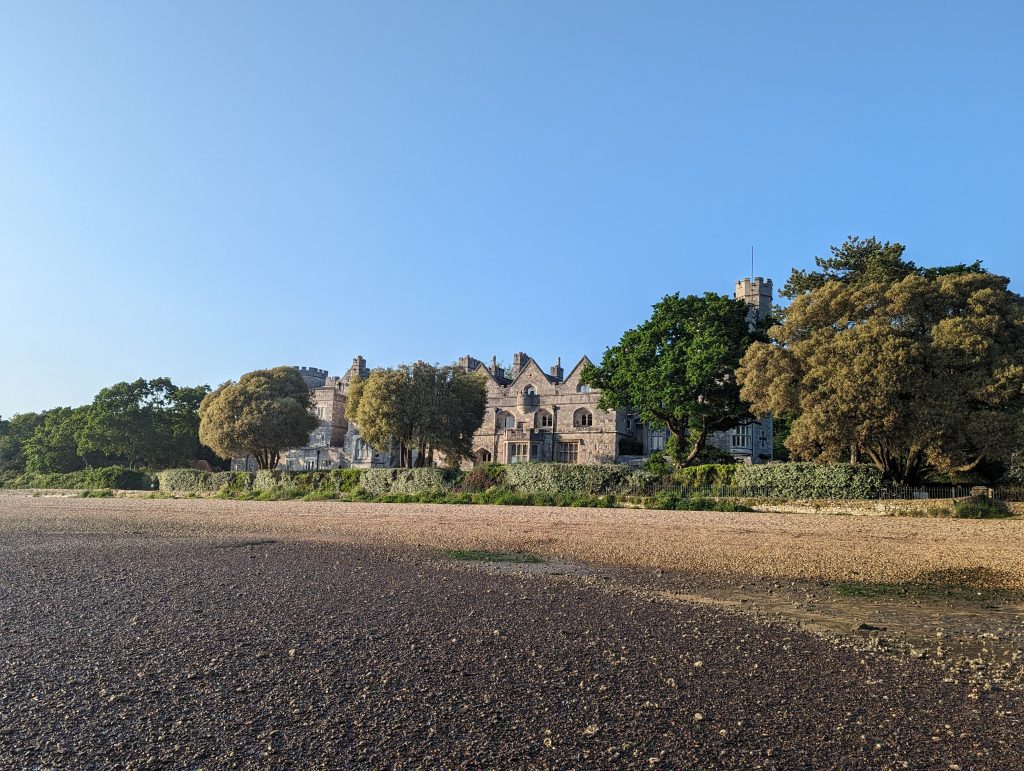
A Story Worth Exploring
I want to be clear — this is speculation, not established fact. I haven’t found a smoking gun that proves Netley stone sits in the foundations of Basing House. But the connection through Paulet is real, the practice of reusing monastic materials is well documented, and the logistics would have been entirely practical.
It’s the kind of question that a proper archaeological investigation could help answer. Comparing stone types, mortar compositions, and tile fabrics between the two sites could either confirm or rule out a direct material link. Until then, it’s a thread worth pulling — and another reminder that Netley Abbey’s story didn’t end with the Dissolution. Its materials, like its influence, may have spread much further than we realise.
If you’ve visited Basing House and noticed any connections to Netley, or if you’ve found building material on the foreshore near the abbey, I’d love to hear about it.