Blind Peter, the Curse of Walter Taylor, and the Haunted Ruins of Hampshire
There are places where the veil between worlds grows thin. Where the past refuses to stay buried. Where, on certain nights, when the mist rolls in from Southampton Water and the moon hangs low over the treeline, the dead walk among the living.
Netley Abbey is such a place.
For nearly three centuries, this haunted ruin has drawn the curious and the foolhardy to its crumbling walls. Some come seeking thrills. Some come seeking treasure. A few have come seeking answers to questions better left unasked. Not all of them left the same way they arrived.
A Place of Shadows
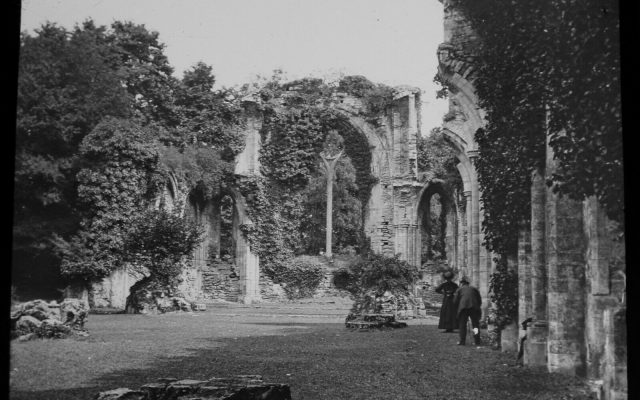
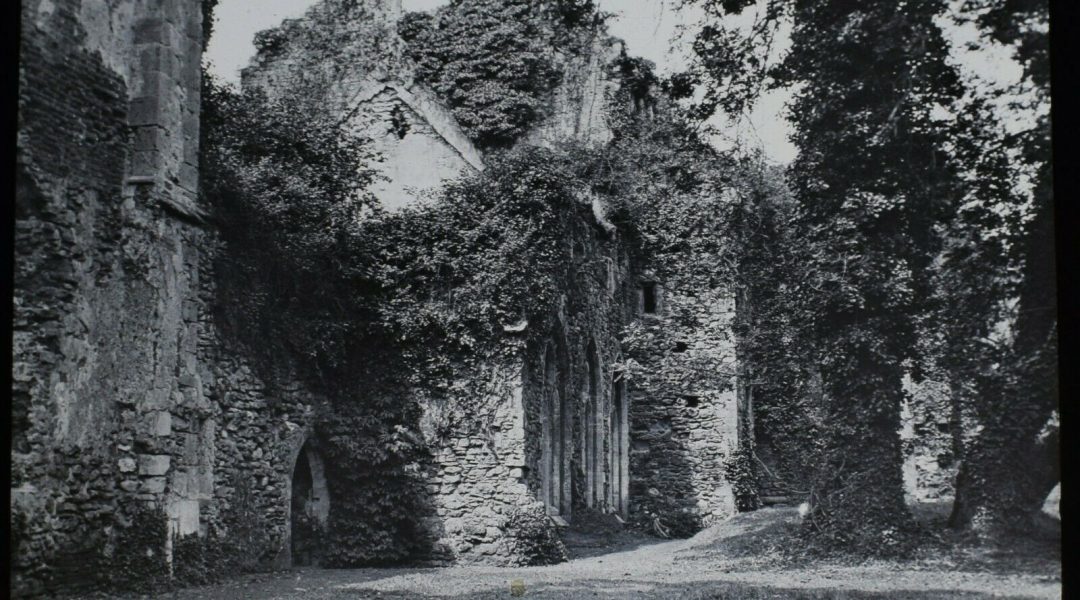
Stand among the ruins at dusk and you will understand why Netley Abbey has spawned so many ghost stories. The roofless nave stretches skyward like a stone skeleton, its empty Gothic windows framing nothing but darkening cloud. Ivy creeps across walls that once echoed with plainsong. Trees have taken root where monks once knelt in prayer. The wind sighing through the broken arches sounds almost like voices—almost like whispered warnings.
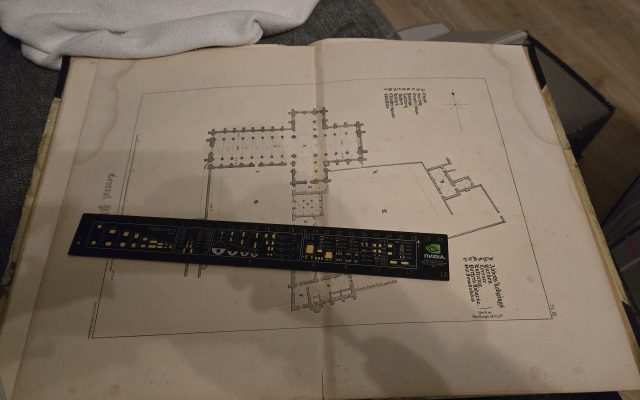
The abbey was founded in 1239, home to Cistercian monks who wore white habits and lived lives of austere devotion. For three hundred years they prayed here, worked here, died here. Then came Henry VIII and the Dissolution of the Monasteries. In 1536, with only seven monks remaining, Netley was seized by the Crown and its brotherhood scattered. The buildings were converted into a grand mansion, but that too fell into decay. By the eighteenth century, the abbey stood abandoned—a picturesque ruin cloaked in woodland, half-swallowed by nature, whispered about by locals who knew better than to venture there after dark.
It is hardly surprising that such a place should be haunted. What is surprising is just how many spirits are said to linger here—and how violently some of them have made their presence known.
The Curse of Walter Taylor
The most famous haunting of Netley Abbey begins not with a ghost, but with a warning—and a man who chose to ignore it.
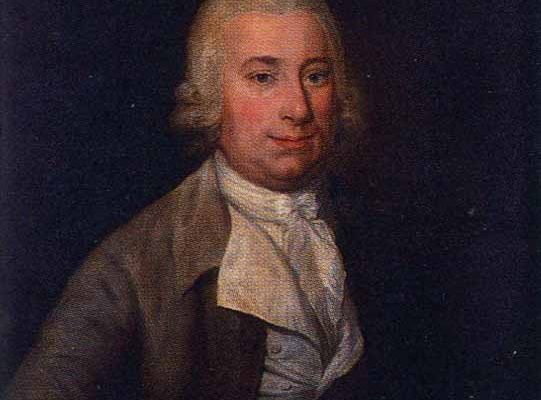
In 1704, the abbey ruins came into the possession of Sir Berkeley Lucy, who saw in the crumbling stonework nothing but profit. He contracted a Southampton builder named Walter Taylor to demolish what remained of the medieval church and sell the materials. It was, after all, just old stone. What harm could come of it?
The night before the demolition was to begin, Taylor had a dream. In it, a hooded monk appeared before him—silent, stern, terrible. The figure raised one pale hand and pointed at Taylor, then at the great west window of the abbey church. The message needed no words: touch these sacred stones, and you will die.
Taylor woke in a cold sweat. He told his friends about the dream. They laughed. It was just nerves, they said. Old superstition. Taylor convinced himself they were right. He had a contract to honour and money to make. What was a dream against good Southampton silver?
He set to work on the west window—the very window the phantom had shown him.
As Taylor worked his pickaxe beneath the ancient tracery, loosening the stones his dream had forbidden him to touch, the entire window arch gave way. Tons of medieval masonry crashed down upon him, crushing him instantly. The eighteenth-century antiquary Browne Willis recorded the grim details: the body was barely recognisable beneath the rubble.
The demolition was abandoned. No one else would touch the cursed stones. And to this day, the west window of Netley Abbey stands open to the sky—a monument to Walter Taylor’s fatal mistake, and a warning to anyone else who might think to disturb the dead.
One might note, of course, that demolishing a ruined medieval building with hand tools was dangerous work even without supernatural intervention. That loose masonry in a structure abandoned for two centuries might fall at any moment. That a man swinging a pickaxe at the base of an unstable arch was courting disaster regardless of any spectral warnings. But such rational explanations have never stopped the story being told—nor the ghost from being seen.
Blind Peter and the Hidden Treasure
Walter Taylor is not the only restless spirit said to walk Netley Abbey. There is another—older, darker, and far more dangerous.
His name is Blind Peter.
Legend holds that when the Dissolution came and the monks were expelled, they did not leave empty-handed. The abbey’s accumulated wealth—gold plate, silver chalices, jewelled reliquaries—was hastily hidden in a secret underground passage beneath the ruins. One monk, Peter, was tasked with guarding the treasure. Some say he was blinded so that he could never reveal its location, even under torture. Others say he took his own eyes rather than betray his brothers. Either way, he died in that dark tunnel, and his spirit has never left.
Blind Peter appears most often on Halloween, though he has been seen at other times—particularly around the full moon, or when someone ventures too close to the sacristy where the sacred vessels were once kept. Witnesses describe a tall, gaunt figure in a dark brown habit, his hood drawn low over a face that should not be looked upon. He moves slowly through the ruins, as if still patrolling his eternal watch. Sometimes he beckons. Sometimes he points toward the abbey. Sometimes he simply stands and stares with eyes that are no longer there.
Those who have felt his presence speak of a terrible cold that descends without warning, a hostility that presses against the chest like a physical weight. Dogs growl and refuse to approach. Compasses spin. The air grows thick with something that is not quite fog.
As for the treasure itself—one man is said to have found the tunnel. His name was Slown, and he entered the passage alone, lantern in hand, certain he would emerge rich. He did emerge, moments later, white as bone and shaking violently. His only words before he collapsed and died were: ‘In the name of God, block it up!’
The passage was sealed. No one has found it since. Perhaps no one has dared to look.
Sceptics might observe that medieval monasteries did indeed have extensive underground infrastructure—drains, cellars, water channels—which could easily become confused with ‘secret passages’ in local memory. That a ruined building surrounded by dense woodland would naturally feel eerie after dark. That the story of hidden treasure appears wherever monasteries were dissolved, fuelled by resentment at the Crown’s seizure of Church property. But tell that to Mrs Neal of Netley, who in 1970 saw the hooded figure beckoning to her from the abbey grounds in broad daylight.
The Grey Ladies and the Walled-Up Nun
Blind Peter is not alone. On Halloween night, three spectral women are said to appear atop the abbey walls—grey, misty figures who drift along the ruined parapets before fading into nothing. The sound of bells accompanies their appearance, though the abbey’s bells were melted down centuries ago.
Who are they? No one knows. Netley was a monastery for monks, not nuns—yet female phantoms have been reported here since at least the eighteenth century. One persistent legend speaks of a ‘renegade nun’ who was bricked up alive somewhere within the abbey walls, punishment for some transgression lost to history. Her tomb has never been found. Her screams, some say, can still be heard.
It is worth noting that the tale of the immured nun is one of the most common Gothic legends in Britain, attached to dozens of ruined abbeys and castles. It speaks to deep anxieties about female sexuality and religious authority—and to the Victorian appetite for lurid tales of Catholic cruelty. Whether any nun was ever actually walled up at Netley is another matter entirely.
Those Who Have Seen
The hauntings of Netley Abbey are not confined to ancient legend. Reports continue to this day.
In the late 1950s, a local woman walking her dog near the abbey grounds at dusk saw a black figure moving slowly across the grass. It disappeared before she could get a clear look. In 1970, Mrs Anna Neal encountered the hooded monk while conducting a dowsing experiment in the grounds of nearby Abbey House. She described a tall, lean figure in a brown cloak who beckoned twice with his right hand, then pointed toward the abbey. The encounter lasted perhaps twenty seconds, but Mrs Neal said it felt like she had been ‘trapped in another dimension where time ceased to matter.’
In 1981, two campers who spent the night in the ruins were woken by a ‘sinister force’ that dropped the temperature around their tent and seemed to press in on them from all sides. Their dog growled continuously and refused to investigate. When they tried to coax the animal toward the source of its fear, it fled.
Two nuns visiting the abbey during this same period reported sensing a ‘distinct presence’ near the sacristy—a feeling of intense hostility accompanied by a sudden, inexplicable cold.
Whether these encounters represent genuine supernatural phenomena or the power of suggestion working on minds primed by centuries of ghost stories, the experiences were real enough to those who had them. And still the reports come in, year after year, generation after generation.
The Ferryman’s Warning
Perhaps the most telling account comes from the poet Thomas Gray, who visited Netley Abbey in 1764. Gray was rowed across Southampton Water by a local ferryman—a man who knew the abbey and its reputation well. When Gray expressed his intention to explore the ruins, the ferryman blanched.
He would not go near the abbey at night, the ferryman said, ‘for all the world.’ There were ‘things seen near it,’ he explained. And there was ‘a power of money hidden there.’
Two and a half centuries later, locals still say the same.
Visit If You Dare
Netley Abbey stands today much as it has for three hundred years—beautiful, melancholy, and unsettling in ways that resist easy explanation. English Heritage maintains the site, and visitors are welcome during daylight hours. The ruins are peaceful enough by day, popular with dog walkers and history enthusiasts, scattered with picnicking families in summer.
But as the shadows lengthen and the last visitors drift away, something changes. The empty windows seem to watch. The wind through the broken arches takes on a different quality. And somewhere in the darkness beneath those ancient stones, Blind Peter keeps his vigil still—waiting for the next fool brave enough, or greedy enough, to seek what he has sworn to guard.
The treasure has never been found. The curse has never been lifted. And the dead of Netley Abbey do not rest.
Sleep well.